

 Admin
 November 18, 2026
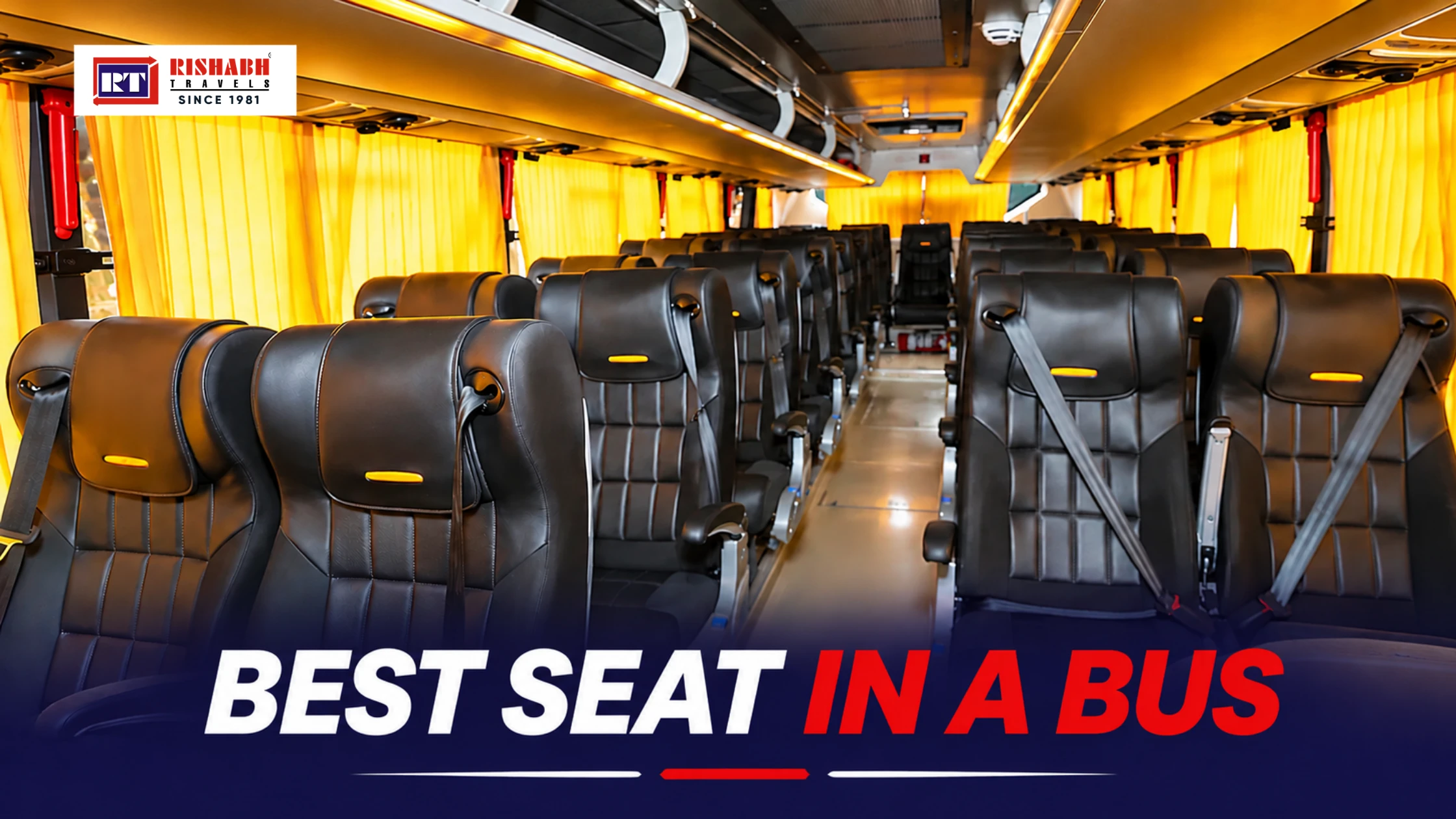
Choosing the right bus seat can make a journey more comfortable, especially when you have several hours of travel ahead. Some passengers enjoy a window view, while others want enough legroom, easy access to the aisle or a suitable place to sleep.
But which bus seat is best for a comfortable journey?
There is no single answer for every passenger. Your ideal seat depends on the type of bus, seating layout, road conditions and personal preferences.
This guide explains how to choose a suitable seat in seater, sleeper, semi-sleeper and Volvo buses.
Which Seat Is Best in a Bus? Quick Answer
For general comfort, a seat around the middle section is often worth considering. However, the best choice changes depending on your travel needs.
| Travel need | Seat to consider | Main reason |
| General comfort | Middle-section seat | May offer a more balanced ride |
| Long-distance travel | Seat with good legroom and back support | Helps you sit comfortably for longer |
| Motion sickness | Forward-facing seat with a clear view ahead | May help some passengers manage symptoms |
| Easy movement | Aisle seat | Easier to leave your seat |
| Outside views | Window seat | Better view during the journey |
| Overnight sleeper travel | Berth away from busy areas | May reduce disturbances |
| Limited mobility | Accessible seat or lower berth | Easier entry and exit |
Front, Middle or Back: Which Bus Seat Is Better?
Your seat’s position affects visibility, accessibility and how you experience movement during travel. Understanding the differences between front, middle and rear seats can help you choose more confidently.
Front Seats: Pros and Cons
Front seats can be appealing if you enjoy seeing the road ahead. Depending on the windshield and seat position, they may provide a wider forward view than seats farther back.
In some buses, front seats are close to the passenger entrance, making boarding and getting off more convenient.
However, the area near the driver can be busy. Passengers may hear announcements, conversations or door activity during stops.
The first row also deserves a closer look. Some buses have a dashboard, partition or other structure in front of these seats, which may affect available legroom.
Consider a front seat when forward visibility or proximity to the entrance matters most.
Middle Seats: Comfort and Stability
Middle-section seats are often a practical choice because of their position between the front and rear of the vehicle.
On some buses, this area may experience less front-to-back pitching than seats at either end. However, the exact feeling depends on suspension, road conditions and wheel placement.
A seat directly above an axle can still experience noticeable bumps. This means the middle row is not automatically the smoothest position in every bus.
Central seating can also provide some distance from activity near the entrance or rear of the coach.
If ride movement is your main concern, consider the seat’s location relative to the wheels rather than relying only on its row number.
Back Seats: Pros and Cons
Rear seats may suit passengers who prefer sitting farther from the front entrance. Some coaches also have a different arrangement in the last row, including seats that are grouped more closely together.
However, movement near the rear may feel more noticeable on rough roads. In rear-engine buses, engine noise can also be stronger in this area.
Another important detail is reclining space. A fixed wall behind the last row may restrict the backrest, making it less suitable for passengers who want to rest during a long journey.
A rear seat is not necessarily a poor choice. Its comfort depends on the particular coach, the road and how much reclining space you need.
Best Seat in Sleeper Bus for a Comfortable Journey
In a sleeper bus, berth height, accessibility, privacy and sleeping space are important factors when choosing where to rest.
For an overnight journey, consider whether your berth is close to an entrance, toilet or another area with frequent passenger movement. These locations may have additional activity during stops.
Upper vs Lower Berth in a Sleeper Bus: Which Is Better?
Both upper and lower berths have advantages. The right choice depends mainly on your mobility and sleeping preferences.
| Feature | Upper berth | Lower berth |
| Access | Usually requires a ladder or steps | Usually easier to enter |
| Privacy | May provide more separation from aisle activity | Can be closer to passing passengers |
| Getting out during stops | Requires climbing down | More convenient |
| Ride movement | Movement may feel more noticeable higher up | Movement may feel different closer to the floor |
| Main consideration | Ability to climb comfortably | Ease of access |
For upper berths, check the ladder or steps, available handholds and any protective barriers. For lower berths, consider how much aisle activity takes place beside the sleeping area.
Mattress condition, berth dimensions and ventilation also affect comfort. These features vary between operators and vehicles.
Neither level guarantees better sleep. Choose the arrangement that suits your needs and allows you to use the berth safely.
Best Sleeper Bus Berth for Solo Travellers and Couples
Solo travellers may prefer an individual berth when the bus offers one, especially if they want a separate sleeping space.
Couples may prefer adjacent berths, but they should confirm that both spaces are actually together. Consecutive berth numbers do not always indicate adjacent positions.
Some paired arrangements have a divider or curtain, while others use a different design. Check whether the available arrangement provides enough space and privacy for both passengers.
Best Seat in Bus for Long Travel
The best bus seat for long-distance travel should help you sit comfortably for several hours.
On a long route, restricted legroom, poor cushioning or limited reclining space can become uncomfortable.
Best Seating Position for Long-Distance Journeys
Before choosing a seat for an extended journey, consider these comfort features:
Legroom: Your knees should have enough space without pressing uncomfortably against the seat in front.
Back support: A supportive backrest helps you maintain a comfortable sitting position. If reclining is important to you, check whether that feature is available.
Head and neck support: A suitable headrest can make resting easier, especially when you expect to sleep while sitting.
Seat cushioning: Padding condition matters because a worn or uneven seat may become uncomfortable over time.
Foot position: Some coaches provide footrests or leg supports. Their usefulness depends on your height and preferred sitting position.
If you expect several hours between stops, also consider how easily you can change position or get up when permitted.
Window Seat vs Aisle Seat for Long Travel
Window and aisle seats offer different advantages.
A window seat is suitable if you enjoy watching the scenery or prefer sitting beside the cabin wall. Some passengers also like having fewer people pass directly beside them.
However, leaving a window seat may require the person beside you to move.
An aisle seat makes it easier to stand up during scheduled stops. This can be convenient if you expect to get off several times or prefer easy access.
The trade-off is that passengers moving through the aisle may occasionally brush past your seat or disturb your rest.
If you enjoy uninterrupted views and rarely get up, consider the window. If convenient movement matters more, the aisle may suit you better.
Best Seat in Volvo, AC Seater and Semi-Sleeper Buses
Comfort features and seating arrangements can vary between different coach types.
Best Seat in Volvo Bus
Volvo bus seating arrangements vary by coach model and operator, so the same seat number may offer different levels of comfort.
Look at the position of doors, fixed partitions and any raised floor sections. Seats beside these features may have different space or access arrangements from regular rows.
Emergency-exit locations can also influence nearby seat design. Never block an exit or assume that an exit-adjacent seat offers extra legroom without checking.
If the operator provides interior photographs, use them to understand the arrangement. A seat map can show where a seat is located, but photographs may reveal details that a diagram does not.
Best Seat in AC Seater and Semi-Sleeper Bus
AC seater buses usually have upright seats, although reclining features vary by model.
Semi-sleeper buses generally allow passengers to recline farther and may provide additional leg support.
For daytime travel, an AC seater may be suitable when the seat provides adequate support and space.
If you expect to rest overnight, compare the reclining angle and leg-support features of the semi-sleeper arrangement.
Remember that a semi-sleeper is not the same as a sleeper berth. You remain in a reclining seat rather than lying flat on a dedicated sleeping surface.
Also consider the position of the seat in front. When its backrest reclines, your available space may change.
How to Understand Bus Seat Numbers and Sleeper Layouts
Bus seat numbers vary between operators, and sleeper coaches may use different labels for upper and lower berths.
Understanding the layout is more useful than memorising a supposedly perfect seat number.
What Does a 2+1 Sleeper Bus Layout Mean?
A 2+1 sleeper layout generally has two sleeping spaces on one side of the aisle and one on the other.
The paired side may accommodate two passengers, while the single side provides an individual sleeping space.
Here is a simplified example:
| Paired side | Aisle | Single side |
| Berth A + Berth B | Passage | Berth C |
| Berth D + Berth E | Passage | Berth F |
| Berth G + Berth H | Passage | Berth I |
Illustrative layout only. Actual berth arrangements, dimensions and numbering vary by operator.
Some sleeper buses have both upper and lower levels. Their booking maps may display the levels separately or use different symbols to distinguish them.
A 2+1 layout describes the general arrangement across the aisle. It does not guarantee a particular berth size, privacy feature or sleeping configuration.
How to Choose the Best Seat Number on a Bus Seat Map
When viewing a seat map, first identify the direction of travel. This helps you understand which seats are near the front or rear.
Next, look at the arrangement of rows and aisles. Check whether your selected position is beside a window, next to an aisle or part of a paired berth.
For sleeper coaches, pay close attention to the symbols used for upper and lower levels. Some platforms use colours, letters or separate tabs to show these differences.
Finally, check whether the map marks entrances, toilets or other facilities that could influence your choice.
If the diagram is unclear, ask the operator to confirm the seat’s location.
Best Bus Seats for Different Types of Travellers
Different passengers have different seating needs. Here are a few situations worth considering.
Best Bus Seat for Motion Sickness
Passengers who experience motion sickness may feel more comfortable when they can see the road ahead.
Looking towards the horizon may help some people manage the mismatch between what they see and the movement they feel.
Reading or using a phone during travel can worsen symptoms for certain passengers. If this happens to you, try looking outside instead.
A forward-facing seat with a clear view may be worth considering, but the effect varies from person to person.
No seat position can guarantee relief from motion sickness. If you frequently experience severe symptoms, consult a healthcare professional before travelling.
Best Bus Seat for Senior Citizens and Passengers With Limited Mobility
For senior citizens and passengers who have difficulty walking or climbing, accessibility should be the first consideration.
Check how many steps are required to board the vehicle and whether suitable handholds are available.
A seat that is easy to reach may be preferable to one that requires moving through several narrow rows.
If the passenger needs a sleeper berth, consider whether they can enter and leave it safely. The berth’s height and available support are important.
Passengers who use wheelchairs or need boarding assistance should confirm accessibility arrangements directly with the operator before booking.
Best Bus Seat for Families With Children
Families often prefer adjacent seats so adults can supervise children throughout the journey.
When selecting seats online, check whether they are actually next to each other. Some booking maps show seats that appear close but are separated by an aisle.
For younger children, review available seat belts and applicable child-restraint requirements.
Sleeper arrangements need additional attention. Upper berths can present climbing and fall risks for young children, particularly where suitable protection is unavailable.
Choose seating that supports supervision and follow the operator’s safety instructions.
5 Things to Check Before Booking Your Bus Seat
Before confirming your ticket, complete these final checks:
- Confirm the vehicle type. Make sure the selected service is a seater, semi-sleeper or sleeper bus as intended.
- Check the available options. Compare the remaining seats against your main priority, whether that is accessibility, privacy or resting space.
- Verify essential facilities. If you need a particular feature, such as a footrest or accessible entrance, confirm that it is available on the actual vehicle.
- Review safety arrangements. Check for available restraints and follow all operator instructions. Never treat a particular seat location as a safety guarantee.
- Confirm booking details. Review the selected seat or berth number, passenger information and journey details before payment.
Conclusion
The best bus seat depends on your journey and personal needs. Consider ride movement, sleeping arrangements, accessibility and available seat features before booking. Comparing these details can help you make a more comfortable and informed choice.
Plan Your Next Bus Journey with Rishabh Travels
Looking for bus tickets or a bus rental? Rishabh Travels helps travellers plan their journeys with bus ticket booking assistance and bus rental services.
Explore our bus routes to find your preferred journey, or check our bus rental services in udaipur for group travel.
For ticket enquiries, bus availability or rental bookings, contact Rishabh Travels to discuss your travel plans.
Frequently Asked Questions
1. Where Is the Best Place to Sit on a Bus?
The middle section is often a good choice for comfort because it may experience less front-to-back movement. However, the best position depends on the bus layout, road conditions and your personal needs.
2. What Is the Most Comfortable Seat on a Bus?
A seat with enough legroom, supportive cushioning and a suitable reclining backrest is generally more comfortable, especially for long journeys. Seat condition and available space matter more than the seat number alone.
3. Which Seat on a Bus Is the Safest?
No single seat is guaranteed to be the safest in every accident. Safety depends on the type of collision, vehicle design and proper use of available seat belts.
4. Is It Better to Sit at the Front or Back of a Bus?
Front seats may offer better road visibility and easier access to the entrance. Back seats may experience more noticeable movement on rough roads. Choose according to your comfort and accessibility needs.
5. Is the Last Seat in a Bus Good?
The last seat can be comfortable in some buses, but rear movement, engine noise and limited reclining space may affect the experience. Check the coach layout before booking.